Free delivery on orders from 500 DHConditions

Kaktus — home

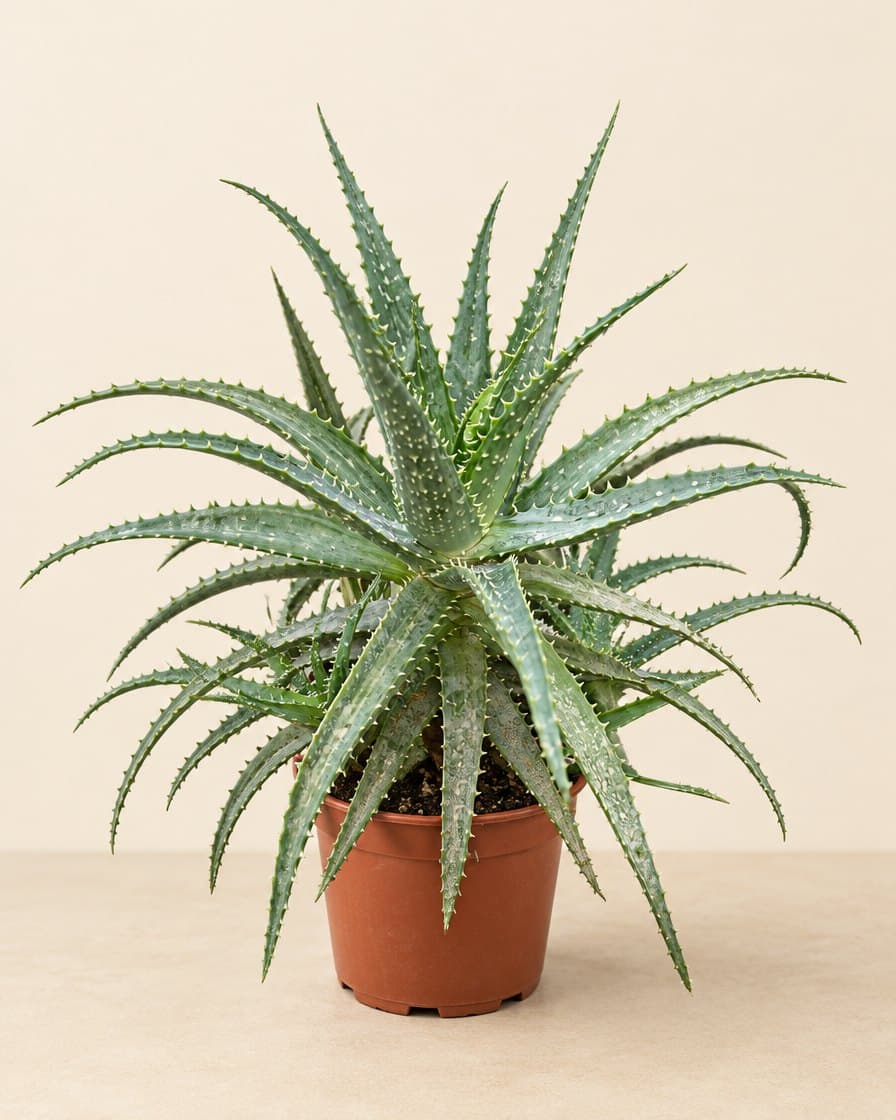
Aloe with slim toothed white-speckled leaves in a nursery pot, on a cream background

Spiky Aloe

Aloe

A graphic rosette of slim, toothed, white-speckled leaves: the sun plant that asks for almost nothing.

Light
Full sun
Water
Very little water
Care
Easy
Heat
High heat
Pets
Mildly toxic

At a glance

Botanical name
Aloe
Also known as
Aloe
Mature height
30 to 60 cm
Growth
Slow growth
Environments
Indoor · Balcony · Terrace
Pets
Mildly toxic to pets

Care

What this plant needs

For each area, the instruction specific to this plant, then the general principle that explains why.

Water

For this plant

The principle

Plants with very low water needs store reserves in their leaves, stems or roots. The risk is never thirst but excess: let the substrate dry through its full depth, water generously in one go, then wait two to four weeks. In winter, once a month is almost always enough.

Light

For this plant

The principle

Full sun means six hours or more of direct light a day. These plants build thick foliage and dense tissue to cope with it; in insufficient light they stretch, lengthen their internodes and lose their compact habit. After buying or repotting, reintroduce direct sun gradually over ten to fifteen days to avoid scorch.

Feeding

For this plant

The principle

A slow grower consumes little: two or three half-strength feeds between April and August are enough. Over-feeding does not speed it up — it burns the roots and leaves a white crust on the substrate. Repotting every three years renews most of its reserves.

Temperature

For this plant

The principle

Good heat tolerance means the summers of Marrakech, Fez or Béni Mellal pose no problem as long as water follows. Days above 38 °C call for early-morning watering and, in a pot, protection of the west-facing wall: the root ball can reach 50 °C before the plant shows anything at all.

Yearly rhythm

Indicative calendar

Calendar derived from the plant's profile — water need, heat tolerance, environment and growth rate — applied to the Moroccan climate; adjust it to your city, your exposure and your substrate.

Indicative twelve-month care calendar
JanFebMarAprMayJunJulAugSepOctNovDec
WateringWatering in January: Nothing to doWatering in February: Nothing to doWatering in March: ReducedWatering in April: ReducedWatering in May: ReducedWatering in June: RegularWatering in July: RegularWatering in August: RegularWatering in September: RegularWatering in October: ReducedWatering in November: Nothing to doWatering in December: Nothing to do
FeedingFeeding in January: Nothing to doFeeding in February: Nothing to doFeeding in March: ReducedFeeding in April: ReducedFeeding in May: ReducedFeeding in June: ReducedFeeding in July: ReducedFeeding in August: ReducedFeeding in September: ReducedFeeding in October: Nothing to doFeeding in November: Nothing to doFeeding in December: Nothing to do
PruningPruning in January: Nothing to doPruning in February: RegularPruning in March: RegularPruning in April: Nothing to doPruning in May: Nothing to doPruning in June: Nothing to doPruning in July: Nothing to doPruning in August: Nothing to doPruning in September: Nothing to doPruning in October: Nothing to doPruning in November: Nothing to doPruning in December: Nothing to do
IntensityNothing to doReducedRegularSustained

Morocco

Where this plant thrives in Morocco

Our observations city by city, crossed with the local climate. A city that is missing is not a refusal: it simply has not been documented for this plant yet.

We have not documented this plant city by city yet. Write to us and we will answer with the detail for your neighbourhood.

Diagnosis

Three signals worth reading

The three most common disorders on a plant with this profile, and the move that corrects them.

  1. 1

    What you see

    Soft or brownish stem bases, translucent leaves, substrate still damp a week after watering.

    Likely cause

    Too much water. On this profile, crown rot beats drought as a cause of loss by a wide margin.

    The right move

    Stop watering entirely, unpot, cut away brown soft roots, air-dry the root ball for a day, repot in a very free-draining mix and wait ten days before the first watering.

  2. 2

    What you see

    Stems stretching towards the window, long internodes, new leaves smaller and paler.

    Likely cause

    Not enough light. A full-sun plant three metres from a window receives less than a tenth of what it asks for.

    The right move

    Move it to the brightest glazing or out onto a balcony, reacclimatising it to direct sun over two weeks. Cut back the stretched shoots: it will regrow compact.

  3. 3

    What you see

    Grey dust on the foliage, growth slowing with no obvious cause.

    Likely cause

    A dusty blade captures markedly less light, and city dust in Morocco builds up fast.

    The right move

    Wipe the leaves with a damp sponge every month, upper and lower surfaces. Avoid leaf-shine products, which block the stomata.

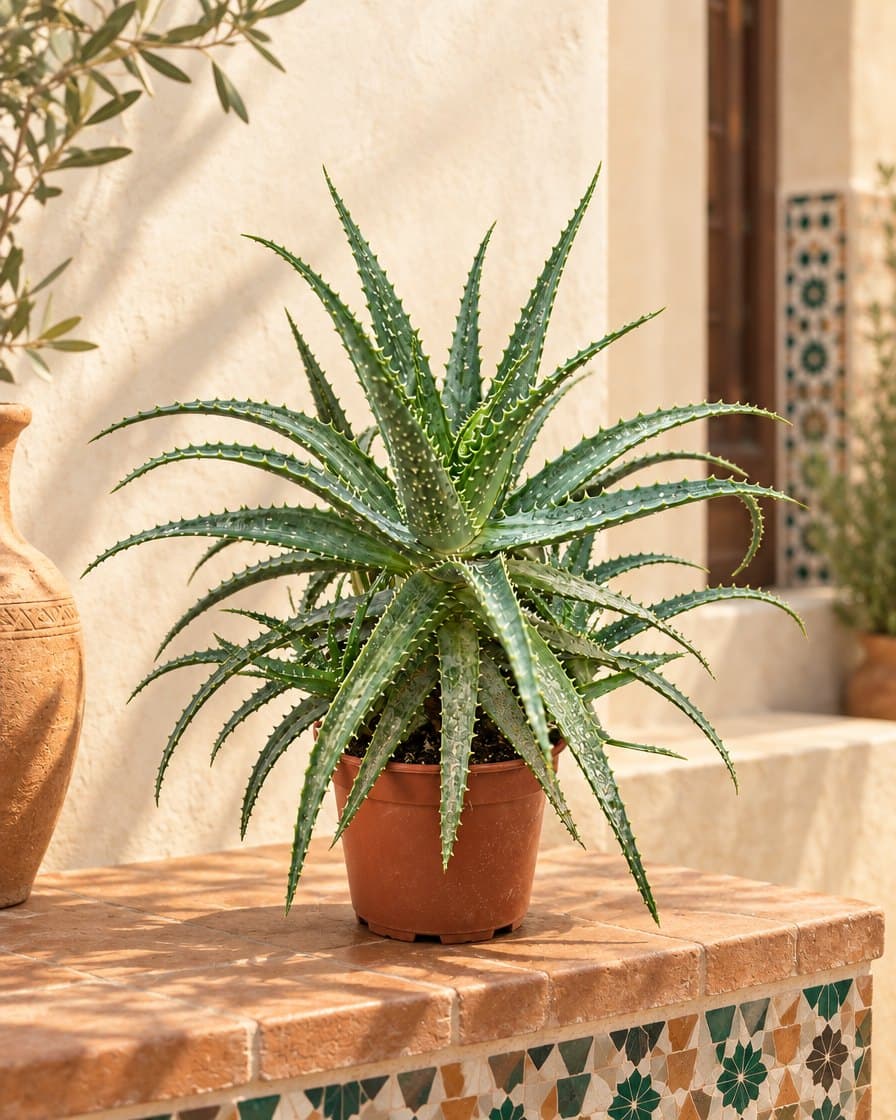
Spiky aloe on the tiled ledge of a sunny terrace

Take the step

Ready to join your space?

Every available size, the premium setup and delivery across Morocco are on the product page.

Spiky AloeFrom50 DHAvailable